
Industries
Veterinary Clinic Cleaning in Fresno, CA
Fresno animal hospitals and veterinary clinics get the waiting room, exam rooms, treatment area, wards and staff spaces cleaned after hours, one room at a time and to your practice’s protocol.
Printable checklist
Clinics built around four-legged patients
Animal care in the Fresno area runs from small-animal practices in Clovis and north Fresno shopping centers to freestanding animal hospitals, after-hours emergency clinics and mixed practices out toward Sanger, Selma and Madera that see dogs and cats in the morning and farm calls in the afternoon. Every one of them shares a problem a regular office never has: fur, paw prints, litter dust and odor arrive with each patient and settle into every room by closing time.
Our veterinary cleaning starts once the last appointment leaves and works through the building in the sequence your practice chooses, so the lobby smells fresh and the exam rooms are reset before the first patient of the morning walks in.
The lobby, the scale and the front counter
Clients judge a clinic in the first minute. Entry glass is cleared of nose prints, the check-in counter and card reader are wiped, benches and chairs are cleaned, and the walk-on scale gets its platform and frame cleaned, so the morning’s first weigh-in happens on a spotless plate. Retail shelves holding food and supplements are dusted, and hair is lifted from baseboards, corners and the base of furniture where it collects.
Separate dog and cat waiting zones are treated as their own rooms. Floors are vacuumed first to take up hair and then mopped with the product your practice names, and patient restrooms get their fixtures, mirrors and floors cleaned and their dispensers refilled.
Exam rooms, treatment areas and the surgery suite
Exam rooms are cleaned to your protocol on every visit: stainless tables, counters, sinks, cabinet fronts, handles and switch plates are cleaned, then disinfected. The products come from your protocol, or crews bring EPA-registered disinfectants and leave the product standing on each surface until its label dwell time is up.
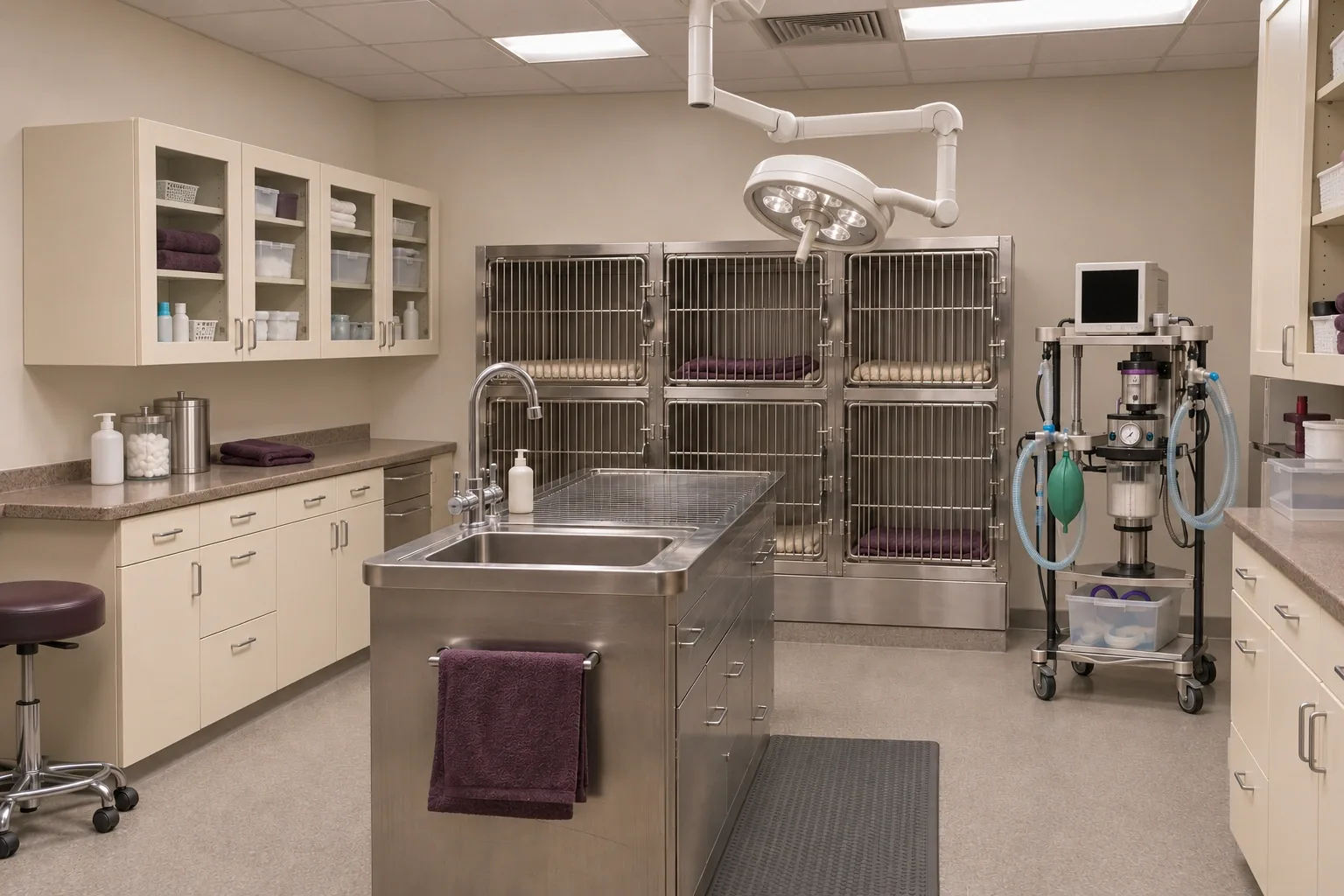
The treatment area gets the same order of work around tables, tubs and stations, with floors done last. When the surgery suite needs a deeper reset, terminal cleaning can be booked for the nights your team picks, covering every surface in the room from the ceiling-mounted fixtures down to the floor edges.
Wards, kennels and boarding rooms
Ward and kennel rooms are cleaned once your staff has settled or moved the patients for the night. Crews clean the floors and drains, wipe walls, gates and door fronts, and work in the order your team marks, leaving occupied runs undisturbed. Boarding and grooming rooms join the route on their own task list, with hair cleared from floors, tubs wiped and bins emptied.
Every crew member has bloodborne-pathogen and HIPAA-aware training, so client files, monitors and medical records are cleaned around and left unread. The pharmacy, lab and records rooms are entered only as your practice arranges.
Staff rooms, offices and the smell of the building
Doctors’ offices, the break room and the staff restroom close out the route. Desks that are cleared get dusted, the break room table, counters, microwave front and sink are wiped, and the floors are vacuumed or mopped for their surface.
Odor is the complaint clients notice first, and it lingers in bins and soft surfaces long after the last patient goes home. Every bin in the building is emptied and relined each visit, lobby trash goes out rather than sitting overnight, and fabric chairs and pet beds in waiting areas are vacuumed so hair and dander do not build up. Air return grilles and vents near the wards are dusted on a regular cycle, since fur collects on them quickly.
Floors that take the most punishment
Claws, wet paws, rolling carts and constant mopping wear clinic floors fast. Sheet vinyl and resilient tile in exam rooms get daily mopping with periodic strip-and-refinish to bring back their finish, and machine scrubbing on a separate interval keeps sealed concrete in the runs and wards clean. Lobby carpet and entry mats are extracted through commercial carpet cleaning, usually on a weekend, so the floor is dry before Monday’s appointments.
After-hours timing for clinics that keep long days
A practice that closes at six leaves the whole evening to work without crossing paths with a patient. Clinics with Saturday hours or late emergency shifts pick the window that suits them, and a hospital that is staffed overnight can have rooms cleaned in rotation as they empty. Restroom and staff-room dispensers can be stocked with paper and soap we supply, or with the clinic’s own.
A supervisor inspects the clinic against your protocol on a regular schedule, and your practice manager has a direct line to the person responsible for the route.
A few useful answers
Common questions
Who moves the animals before the ward is cleaned?
Your staff. The crew starts each ward after your team has moved or settled the patients, and works around any occupied kennels in the order your team marks.
What do you disinfect our exam tables with?
Whatever product your protocol specifies. Where the protocol leaves it open, the crew supplies an EPA-registered disinfectant and lets the label dwell time pass before wiping.
Can the surgery suite get more than the nightly clean?
Yes. Terminal cleaning for the surgery suite or a procedure room can be booked on the nights you choose, on top of the regular visit.
When do you clean a clinic that is open 24 hours?
Rooms are cleaned as they come free. Lobbies, exam rooms and staff areas follow a set rotation during the quietest hours, and the treatment area is done when your team clears it.
What do you need to put together a quote?
A walkthrough of the building, the number of exam rooms and wards, which rooms need terminal cleaning, the floor types and the nights per week you have in mind. A written quote follows from that.