
Industries
Laboratory and Cleanroom Cleaning in Fresno, CA
Testing labs, research rooms and controlled spaces in Fresno, cleaned to your written housekeeping procedure at hours that keep clear of samples, runs and analysts.
Printable checklist
Where the Valley’s samples go
Fresno sits in the middle of San Joaquin Valley farm country, and the area’s growers, packers, dairies and food plants send a steady stream of samples to local laboratories. Food-safety and microbiology labs, dairy and pesticide-residue labs, soil and water testing rooms, university teaching and research labs, and clinical labs inside medical buildings all operate in and around the city.
Each of those rooms depends on clean surfaces and floors to keep results trustworthy, and each has its own written rules for who touches what. Our lab cleaning works to those rules, taking the housekeeping off the analysts’ list so they can stay on the bench.
Bench tops, sinks and the outside of fume hoods
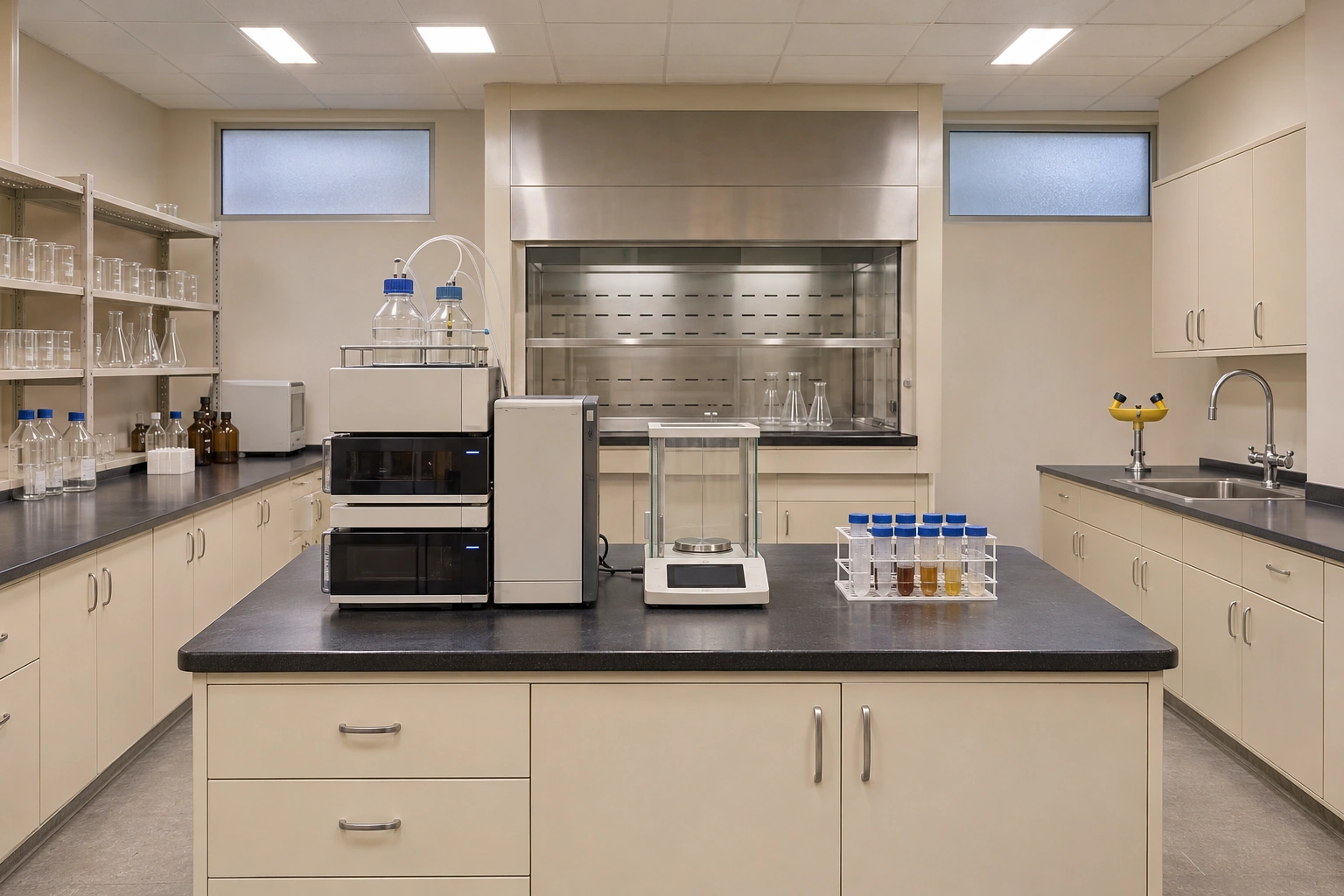
Once staff clear and release a bench, the crew wipes the work surface, shelving edges and backsplash with the cleaner your procedure names. Sash glass and the outside of fume hoods and biosafety cabinets are wiped down, along with door handles, light switches, keyboards at shared stations and the fronts of refrigerators and incubators.
Samples, reagents, notebooks and instruments stay exactly where the analysts leave them. Sinks and drainboards in the general lab space are scrubbed, paper towel and soap dispensers are refilled, and general trash and recycling are removed to the building’s collection point.
Receiving counters, prep rooms and glassware wash-up
Sample receiving sees coolers, boxes and paperwork arrive all day during harvest and packing season. Counters, scales and the floor around the intake area are cleaned, and cardboard is broken down and cleared. Prep rooms get their surfaces wiped and floors mopped after the day’s grinding, weighing and dilution work is finished.
Wash-up rooms get the walls around the sinks, the drying racks’ frames and the floor scrubbed, since standing water and splashes collect there faster than anywhere else in the lab.
Controlled rooms and cleanrooms
A cleanroom or controlled room comes with its own procedure, and the crew follows yours step by step: the gowning sequence at the anteroom, the order rooms are entered, the wipes, mops and solutions allowed inside, and the direction of each pass. Walls, pass-throughs and surfaces are worked from the ceiling down and from the cleanest area toward the exit, and each task is logged on the lab’s own sheet when you keep one.
Anterooms and gowning areas are cleaned first on each visit. Benches and lockers are wiped, garment bins are emptied, and tacky mats at the doorway are peeled to a fresh layer when the room uses them, so nothing from the corridor rides in on the crew’s shoes.
Dedicated tools stay with the room they serve and never travel to the general lab or the offices. The crew learns your procedure during setup and works to it on every visit after that.
Lab floors under carts and spills
Lab floors take rolling carts, dropped samples and a steady stream of foot traffic. Sheet vinyl and tile are damp-mopped on every visit, with corners and the toe kicks beneath benches reached by hand. Sealed concrete in sample storage and receiving areas is scrubbed with an auto scrubber on its own interval, and vinyl tile in corridors and offices gets stripped and refinished during a shutdown week, booked through our commercial floor care service.
The rest of the building
A testing lab also has a front office, a client drop-off counter, restrooms and a break room. These spaces go on the same visits with their own janitorial task list, so the whole building is in order when the morning shift arrives. Labs inside a food plant can pair this work with food manufacturing cleaning, and labs serving growers can add agricultural and greenhouse cleaning for their trial greenhouses and potting rooms.
Conference rooms where results are reviewed with customers, and the locker area where staff change into lab coats, are dusted, wiped and vacuumed on the same visits, and shared microwaves and refrigerators in the break room are cleaned out on a set day each week.
Hours that keep clear of the work
Labs run on sample deadlines and instrument runs, not office hours. Cleaning can follow the last batch of the night, come in before the first shift, or run on weekends when the building is quiet. During harvest, when sample volume climbs, visits can move to keep pace, and a deep clean can be booked into a planned shutdown or between semesters at a teaching lab.
Crews are background-checked. On quality inspections, a supervisor compares each visit with the procedure your team wrote.
A few useful answers
Common questions
Will your crew move samples or instruments?
No. Samples, reagents, notebooks and instruments stay where staff leave them, and benches are cleaned once staff release them.
Can you follow our cleanroom gowning and cleaning procedure?
Yes. The crew learns your written procedure during setup, including gowning, the wipes and solutions you allow, room order and logging, and follows it on every visit.
Is the outside of a fume hood part of the visit?
Yes. Sash glass and the outside of fume hoods and biosafety cabinets are wiped down as part of each visit.
Can cleaning happen after our last run of the night?
Yes. Visits can start after the final batch, before the first shift or on weekends, and can shift during harvest when sample volume rises.
How does a lab get a cleaning quote?
Request a walkthrough. Have a floor plan or room list, your housekeeping or cleanroom procedure and the hours each area is free on hand, and the plan and written quote follow from that visit.
Industries